
ENGLISH [kee-ku-chá] :
that who moves, by need or will, in an unexpected but logical way.
ESPAÑOL [ki-ku-chá] :
de quien se mueve, por deseo o necesidad, inesperada pero lógicamente.

“Certain rivers produce a murmur that’s quite strange: to some of us it sounds just like regular noise, but to others –the Quikuchá people, for example– certain rivers appear in their dreams with perfectly understandable voices.
One has to really wonder at the rivers’ capacity to remember, but also at their patience to listen, absorb and share, without getting aggravated or afraid, like others sometimes do. Perhaps that’s why rivers can tell the story of Martians and it’s not the other way around.
A cloud told me all this, after picking it up from a pond in Uruguay, and then it added that some Martians used to wonder, like some of us still do: how can we understand like water?”
–“Marte”, a short story

<English>
During a stay in the countryside of Uruguay, a short story appeared to me after the rain. “Marte” is a tale about evolution, extinction and remembrance. A cautionary tale about oblivion, reaching from a distant time but from similar circumstances to ours.
Español
En un cuento de ficción que escribí durante una visita a la zona rural del Uruguay años atrás, asomó por primera vez una entidad que de alguna forma se ofrecía a ser conocida. La historia en “Marte”, publicada en el volúmen 9 de “Label Me Latina/o” (Otoño 2019), narra cómo otrora un grupo de animales en el planeta rojo logró distinguirse de sus pares cuadrípedos al ponerse de pie y desarrollar un lenguaje propio. Para lidiar con la violencia y el miedo que surgieron por alienación, encontraron una planta con efectos amnésicos, gracias a la cual fueron capaces de olvidar sus recuerdos asociados al dolor –pero también su propia identidad. La historia, “recogida de una nube” y transmitida de un planeta a otro a través de los ríos que nos rodean, habla de cómo el agua contiene ésta y otras tantas historias. “Para muchos, los ríos no emiten más que un murmullo, pero para otros –los Quikuchá, por ejemplo– estos ríos hablan a través de sueños para contar estas historias.”
<English>
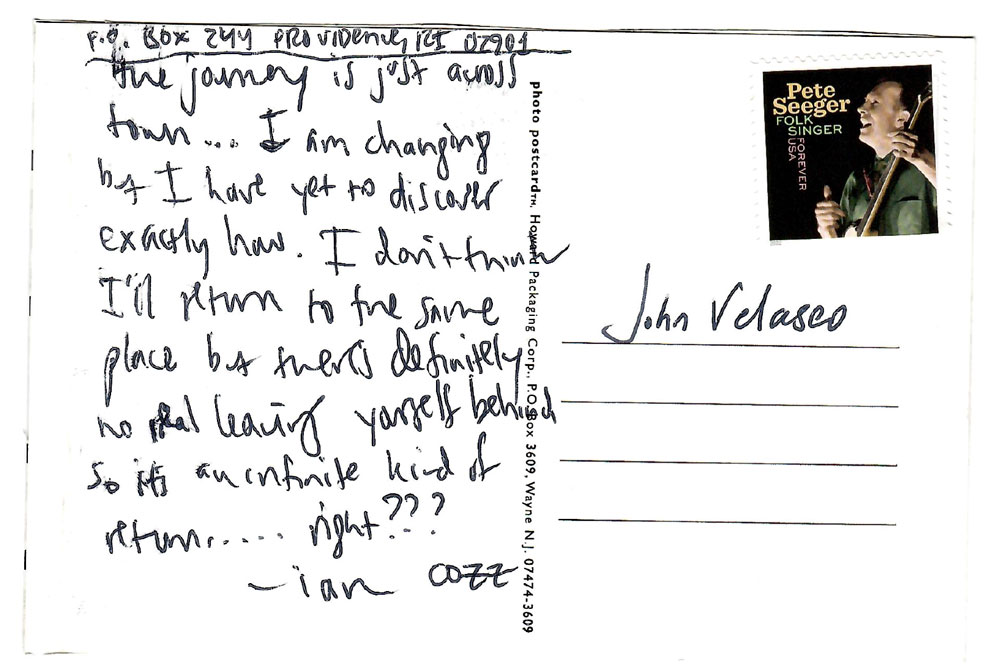
I started inquiring about the ways we (re) create our journeys –and how they get carried through space. However uncertain it feels to witness our own story unfold in front of our eyes as it does, once we “come through” on the other side and look back on our footsteps, we are bound to find a sense of relief: “it all make sense now”.
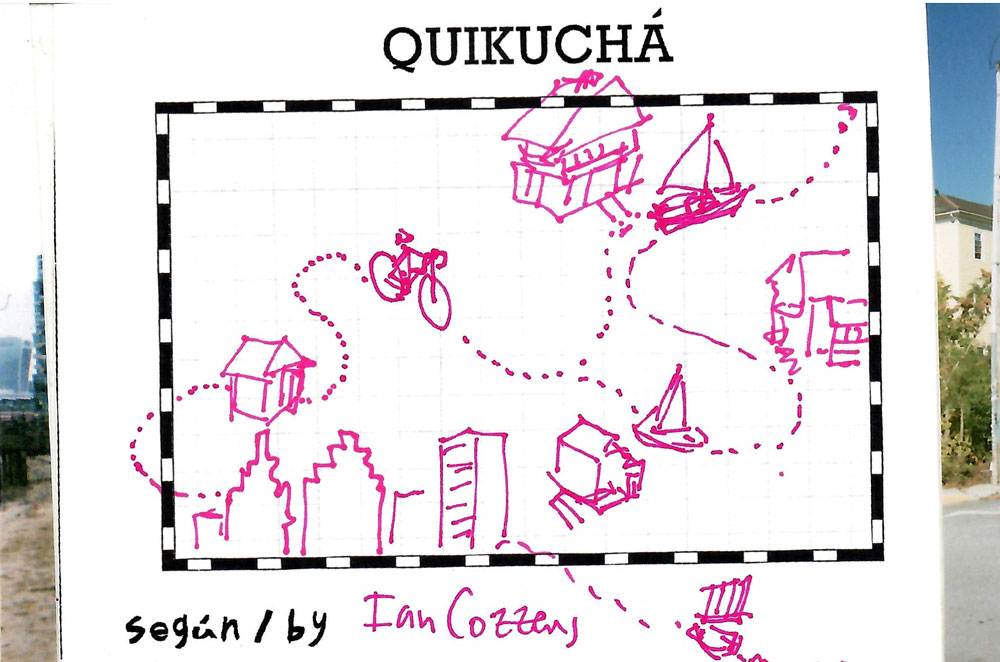
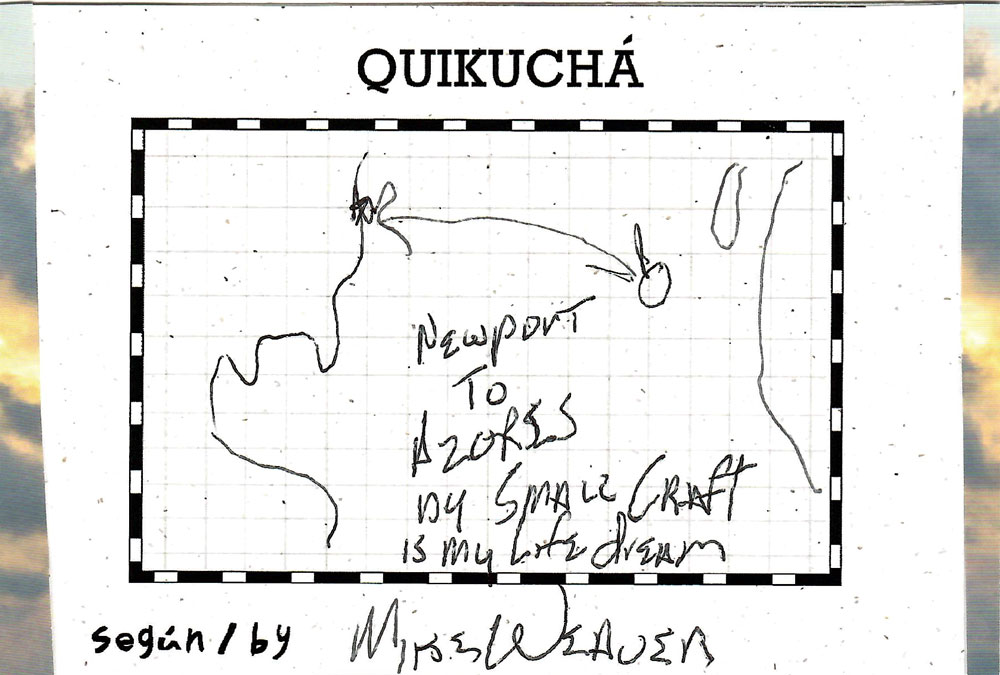
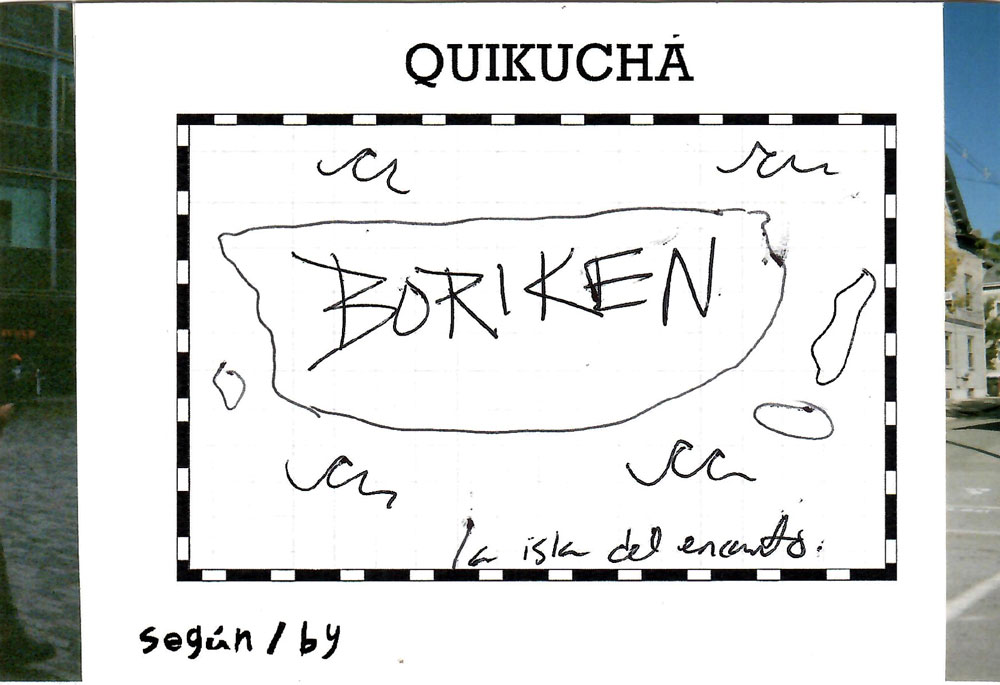
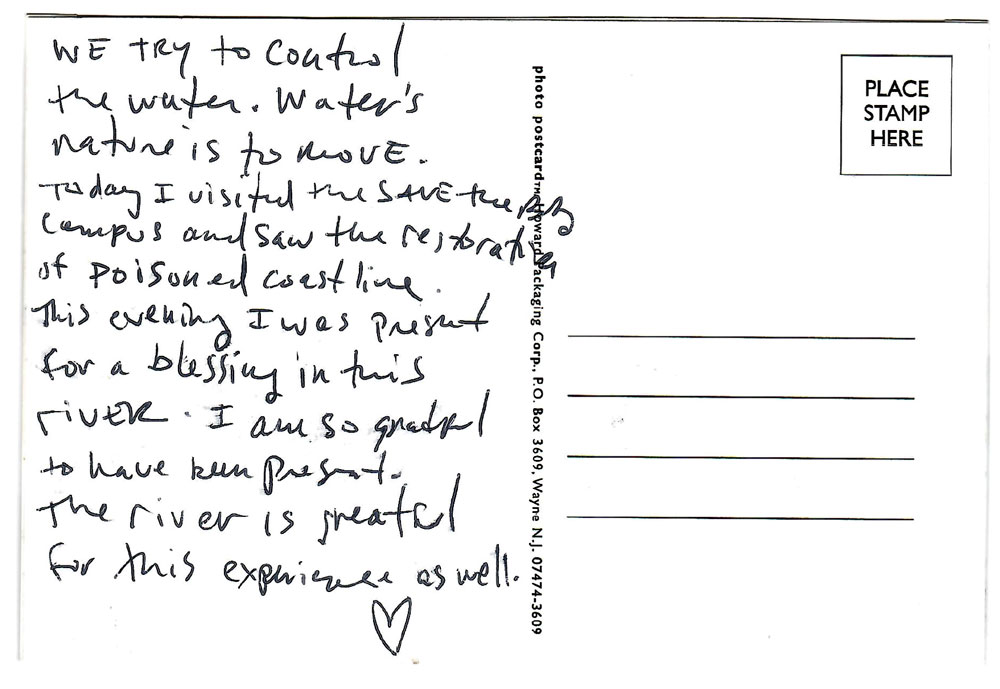
Quikuchá is a way to embody this ebb and flow. Like water, it listens as it moves through personal storytelling, countermapping, live performances and video projections, offering a glimpse into the uncertain world of migration –where the only certainty is to move.
Español
A partir de entonces empecé a profundizar en cómo creamos nuestras historias, y cómo viajan grandes distancias. Y aunque las transitamos con incertidumbre, no tarda en llegar el momento en que miramos atrás y pensamos con alivio que todo tuvo sentido.
¿Cómo encontrar el balance entre estos sentimientos opuestos? Quikuchá plantea un acercamiento a este ir-y-venir. Como el agua misma, escucha mientras se mueve. A través de historias, mapas subjetivos, performances en vivo y elementos audiovisuales, presenta un mundo de incertidumbre en el cual la única certeza es la de seguir moviéndose.


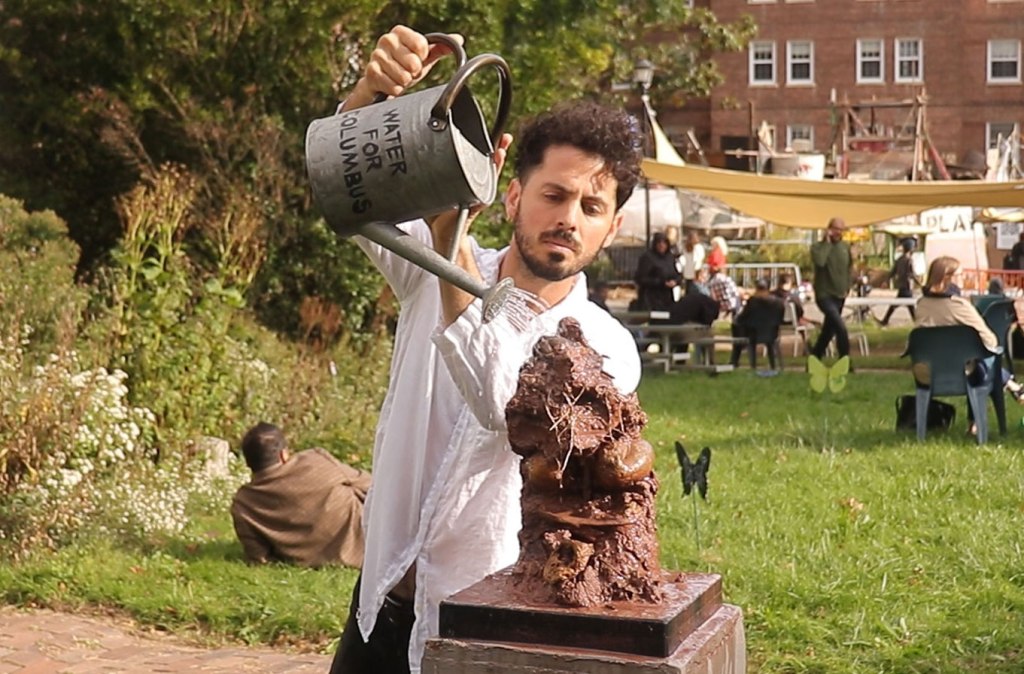
Serendipity led me to meet artist Emily Housart during a residency at Swale House in NYC/Manahatta Land. I had just sailed with Luna –a 29′ sloop– from Providence, RI/Narragansett Land, and Emily was about to leave Governors Island after installing a bust of C.C. made out of clay, feces, and potatoes.
We found sinergy exploring how we choose to remember the past –understanding that doing so is a way of moving through the present. Ours materialized in watering Columbus’ bust with water from the East River.



Collaborators
Zack Kligler (they/them) a writer, researcher, and editor born and raised in Brooklyn, New York and currently living in Providence, Rhode Island. His areas of exploration include water, history, and the construction of global and local ecosystems of solidarity.
Kelton Ellis (he/him) is a writer and editor living in Providence, Rhode Island. His criticism, journalism, and editorial work have appeared in n+1, The Nation, and Boston Review.
Victoria Salsa Cortizo (she/her) is an Argentinean social anthropologist graduated from the Buenos Aires University. She has achieved a Doctorate degree in Medical Sciences from her ethnographic study of obstetricians in the Buenos Aires province. She is a fellow of the Commission for Scientific Investigation in Buenos Aires and the National Commission for Scientific and Technical Investigations in Argentina (CONICET). She currently teaches at the Medical Science Department of the National University of La Plata in the areas of community health and public health.
Ilze K. Berzins (she/her) is a trained ecologist, veterinarian, comparative pathologist and public health official who holds an interdisciplinary approach to her clinical, teaching, conservation and research practices focused around the concept of One Health. Ilze holds a Bachelor and Master’s Degree in Biology from Stanford University, a PhD in Zoology from University of California, Berkeley, a DVM from the University of California, Davis, and a MPH from the University of Iowa. She is currently an aquatic health consultant through her personal program “One Water, One Health, LLC”.




@WordPress
 Nan Joubá